
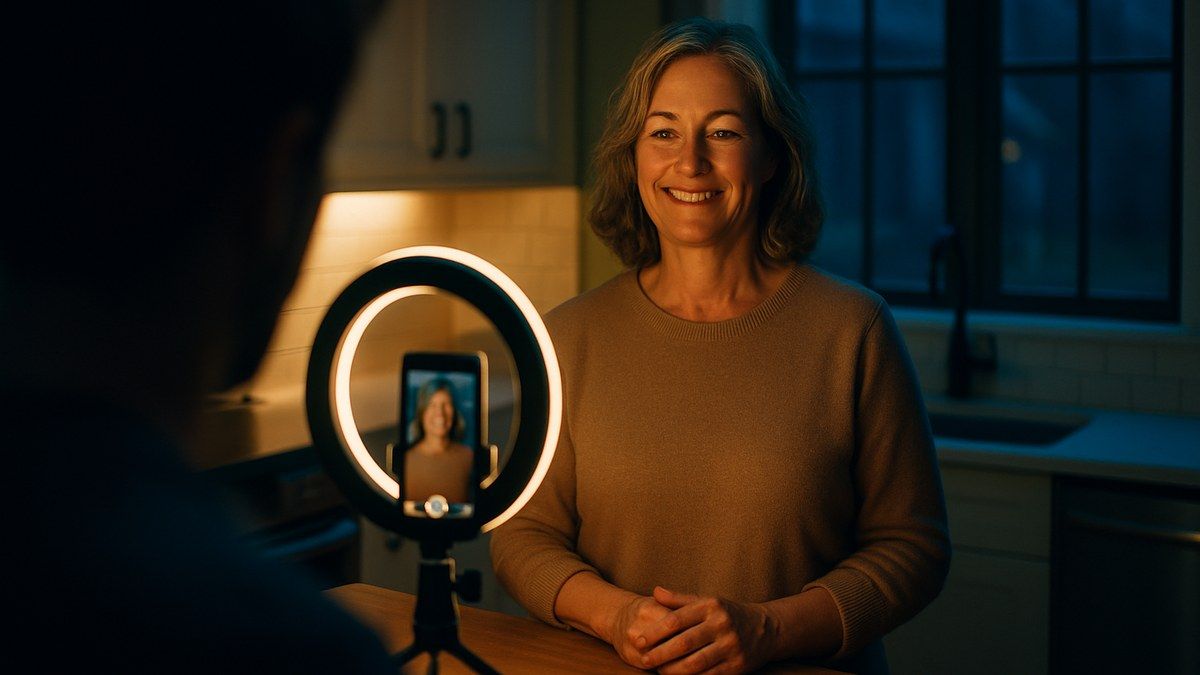

Video testimonials are the most persuasive marketing asset most small businesses don't have. A written review says a customer was satisfied; thirty seconds of a real person's face, voice, and specifics proves it in a way no copywriting can fake — and prospects know it, which is exactly why they weigh video so heavily.
The reason businesses don't have them isn't that customers refuse. It's that nobody asks, and when someone finally does, there's no process: no timing, no questions prepared, no idea what to do with the footage. The result is either nothing, or one awkward clip from 2019 buried on a YouTube channel with nine views.
This guide covers the full pipeline: which customers to ask, how to ask so they say yes, how to capture something usable without a film crew, and where the finished clips actually earn their keep.
Why Video Testimonials Outperform Written Reviews
Video carries the trust signals text strips out: a real face, an unscripted voice, hesitation and enthusiasm in the right places. Prospects have learned to discount written praise — anyone can type five stars — but faking a comfortable human being on camera is hard, and viewers' instincts for authenticity are good.
Video also transmits specifics with emotion attached. "They finished on time and the kitchen looks amazing" reads as boilerplate; the same sentence spoken by a homeowner standing in that kitchen, half-laughing about how much she dreaded the project, lands as evidence. Specificity plus emotion is what moves buying decisions, and video is the only format that delivers both at once.
One more advantage matters for small businesses: a single good testimonial is reusable everywhere — website, social feeds, ads, proposals, email signatures — for years. Few marketing assets have that shelf life per dollar. The goal isn't dozens of clips; it's a small library of three to six strong ones covering your main services and customer types.
Who to Ask: The Three Customers You Want on Camera
Ask the customers whose stories match what future buyers need to hear — which is not always your happiest customer, and almost never your most polished friend-of-the-business.
Three profiles cover most needs. The skeptic converted: someone who almost didn't hire you — worried about price, burned by a competitor, nervous about the process — and is now delighted. Their story pre-answers the exact objection your prospects are sitting on, which makes it the most valuable testimonial you can own. The ideal-customer mirror: a customer who looks like the buyers you want more of — same industry, situation, or neighborhood — because viewers trust people they recognize as "someone like me." The vivid storyteller: the customer who already tells your story well in conversation or wrote you an unusually specific review; enthusiasm and detail on paper usually survive the transition to camera.
Timing beats everything else in the selection: ask at the peak — the walkthrough, the launch, the moment they say "we love it." Satisfaction is a perishable asset; three weeks later the delight has cooled into mere contentment, and contentment makes flat video.
How to Ask So They Say Yes
People decline video requests out of uncertainty, not unwillingness — so a good ask removes the uncertainty: how long, what they'll be asked, and that nothing needs preparing.
The working script is three sentences: "Would you be open to a quick two-minute video about your experience? I'll ask you three easy questions — no preparation, nothing to memorize — and you can redo anything you don't like. It would help other homeowners who are where you were six months ago." Each clause does a job: bounded time, no performance pressure, an edit safety net, and a purpose framed as helping people like them rather than advertising you.
Make saying yes cheap. Offer to do it on the spot at the final walkthrough or delivery, when they're present, dressed, and standing in the finished result — the best set you'll ever get. For remote or B2B customers, offer a recorded video call at a time they pick. And accept a graceful fallback: someone who declines video will often happily record audio or approve a quote with their photo, which still beats text alone.
A note on incentives: keep them modest and disclosed if you use them at all — a thank-you gift after the fact is fine; payment for praise poisons the asset and, in review contexts, violates platform rules. The testimonial's value is its honesty.
Capturing It: Three Ways, From Phone to Pro
The best capture method is the one that actually happens. Three tiers work, and a smart business uses all three for different moments.
Tier one: your phone, on site. A modern phone shoots perfectly usable testimonial video if you control three things: light (face the customer toward a window or the open sky, never backlit), sound (get within arm's reach or use a cheap clip-on mic — bad audio kills more clips than bad framing), and stability (prop or hold steady at eye level, horizontal for website use, vertical for social). Shoot each answer twice; the second take is almost always better.
Tier two: remote recording. For distant customers, a recorded video call works, and purpose-built async tools let customers self-record answers to your questions at their leisure. Quality varies with their setup, so send the same three tips: window light, quiet room, phone at eye level.
Tier three: a professional shoot. Worth it when the testimonial anchors a homepage or ad campaign — pro lighting, sound, and b-roll of the actual work elevate one strong story into a brand asset. Many businesses batch this: one shoot day, three customers, plus b-roll that upgrades every other video they make. This is the tier where a video production partner pays for itself.
Whatever the tier, interview rather than direct. Ask, then stay silent: "What was going on that made you look for help?" "What almost stopped you from hiring us?" "What's different now?" "What would you tell someone considering us?" Those four questions produce a complete story arc in the customer's own words — and the unscripted answer is always better than the sentence you would have written for them.
Editing, Length, and the Release Form
Editing a testimonial means removing friction, not polishing personality. Cut the setup fumbling, tighten pauses, and keep the imperfections that read as human — the laugh, the "honestly, I was nervous," the search for a word. Over-polished testimonials trigger the same skepticism as written ones.
Cut to purpose: a 30–60 second core clip for website and social, a 15-second highlight for ads, and keep the full two-to-three minute version for proposals and sales conversations where an engaged prospect will actually watch it. Add captions to everything — most social viewing happens with sound off, and captions also make the clip accessible. Open with the strongest sentence, not the chronology; you're allowed to reorder answers as long as you never change meaning.
Handle permission properly, once, in writing: a one-page release covering use of their name, likeness, and words across your marketing channels, signed before you publish. Customers sign it readily when asked at recording time; chasing signatures months later is awkward. Store the signed releases with the footage — the asset isn't fully yours until the paperwork is.
Where Video Testimonials Earn Their Keep
A testimonial in a YouTube graveyard earns nothing; placement is what converts the asset into revenue. Deploy each clip where doubt actually lives.
On the website, place testimonials next to the decision they support, not on a separate reviews page nobody visits: the skeptic-converted clip beside your pricing or quote form, the service-specific story on that service's page, the ideal-customer mirror on the homepage. In advertising, testimonial clips routinely outperform brand-made creative for local businesses — a 15-second customer story with captions is a proven format for the approach in our Facebook and Instagram ads playbook. In the sales process, a well-chosen clip sent with a proposal or estimate answers the "can we trust them" question while you're not in the room.
Round out the placements with the steady channels: social posts (one testimonial per month is a sustainable, high-performing cadence), email — both campaigns and the drip sequences that nurture slow deciders — and Google Business Profile posts linking to the clip. Then refresh the library on a rhythm: one new capture per quarter keeps stories current, covers new services, and means no single customer's face has to carry your whole reputation for years.
Frequently Asked Questions
How long should a video testimonial be?
Cut to purpose: 30–60 seconds for website and social use, about 15 seconds for ads, and the full two-to-three minutes reserved for proposals and sales conversations. Capture five to ten minutes of interview to get those cuts. Lead every version with the strongest sentence rather than the chronological beginning.
What questions should I ask in a testimonial interview?
Four questions produce a complete arc: What was going on that made you look for help? What almost stopped you from choosing us? What's different now? What would you tell someone considering us? Ask, then stay silent — the pause after each answer often produces the best line as they elaborate unprompted.
Do I need a customer's written permission to use their video?
Yes — get a simple one-page release covering their name, likeness, and statements across your marketing channels, signed at recording time when goodwill is highest. Verbal consent fades and memories differ; the release protects both sides and makes the footage a durable business asset you can keep using years later.
Can I pay customers for video testimonials?
Avoid paying for praise — it undermines the honesty that makes testimonials work, and paid endorsements generally require disclosure, while review platforms prohibit compensated reviews outright. A modest thank-you gift given after an unconditional recording is a reasonable courtesy. The safer currency is timing: ask at peak satisfaction and most happy customers say yes for free.
What if a customer is willing but nervous on camera?
Interview, don't direct: ask conversational questions off-camera and let them talk to you, not the lens. Promise — and mean — that they can redo anything, and shoot each answer twice; second takes relax. If they stay stiff, fall back gracefully to audio over photos of the work, which preserves the voice and story without the camera pressure.
Put This to Work in Your Business
Style Strand Media plans, shoots, and deploys video testimonials — from phone-shot capture systems to full production — for businesses across North Myrtle Beach and the Grand Strand, and for remote clients nationwide.