
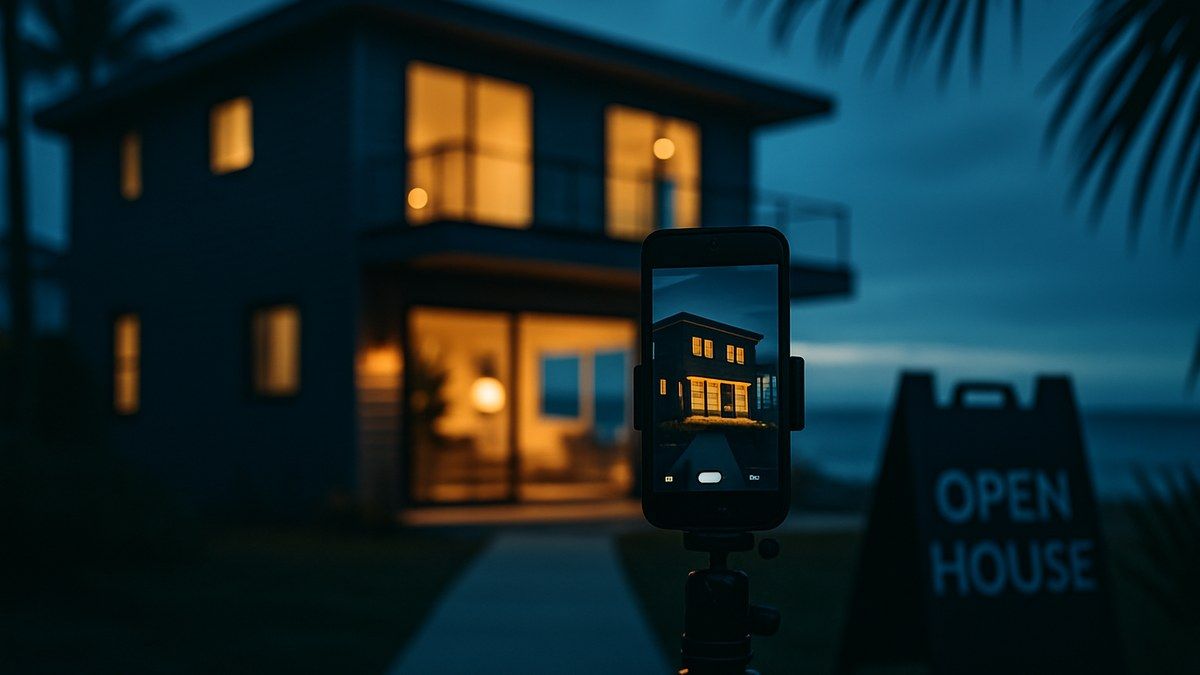

Open house marketing used to mean balloons, a yard sign, and a sign-in sheet. Today, the National Association of Realtors reports that every buyer in its 2025 survey used the internet during their home search, and only about 4% found the home they bought through a yard or open house sign. The open house has not died — it has moved. It now starts on a screen days before anyone touches your front door, and the agents winning listings on the Grand Strand treat the in-person event as the finale of a digital campaign, not the campaign itself.
This playbook walks through that campaign end to end: the media you need before you schedule anything, how to promote the event where online-first buyers actually are, how to run a hybrid live-plus-virtual showing, and how to turn every visitor — physical or digital — into a followed-up lead. It applies whether you are selling an oceanfront condo in North Myrtle Beach or a new build in Carolina Forest.
Why the Open House Now Starts Online
Buyers pre-tour your listing online and decide whether the in-person visit is worth their Saturday — so the digital presentation, not the event, does the heavy lifting. NAR's 2024 profile found 52% of buyers discovered the home they ultimately purchased online, and its 2025 survey puts internet use in the search at effectively universal, with roughly 70% of buyers searching from a phone.
That changes the job of open house marketing in two ways. First, the audience is bigger than the neighborhood: a well-promoted listing event reaches relocating buyers in Charlotte, Columbus, or New Jersey who will never see your sign on Ocean Boulevard. Second, the event itself becomes a deadline device. "Open Saturday 11–1" gives online browsers a reason to stop scrolling and commit to a time — the same scarcity mechanic that makes event marketing work in every other industry.
The practical conclusion: budget your effort roughly 70/30 in favor of the digital layer. Two hours of staging cookies matters less than a listing page that earns the click in the first place.
Build the Media Stack Before You Set a Date
Do not schedule the open house until the listing's media can carry it. The minimum stack for a serious listing is professional photography, a 3D or virtual tour, a floor plan, and a short vertical video — in that order of priority.
The numbers justify the spend. Zillow's own data shows listings with a 3D Home tour received on average 37% more views and sold about 14% faster than listings without one, and 61% of buyers say they wish more listings offered 3D tours. Among millennial buyers — now the largest cohort of first-time purchasers, with a median first-time buyer age of 40 — 40% told Zillow they would be comfortable buying a home after a virtual viewing alone. A $200–$400 Matterport or Zillow 3D session is cheap insurance against a listing that online buyers skip.
The vertical video deserves special attention because it doubles as your ad creative. A 45–60 second walkthrough shot on a gimbal — front door, main living space, kitchen, primary suite, the view or outdoor space, one closing line with the open house date — works on Instagram Reels, Facebook, TikTok, and YouTube Shorts without re-editing. If video production is not your strength, our video and creative media team builds exactly this kind of listing asset, and the deeper strategy is covered in our guide to real estate video marketing.
Promote It Like an Event, Not a Sign in the Yard
Give the open house a 5–7 day promotional runway with a specific job for each channel. A sign put out Friday night reaches drivers; a structured week of promotion reaches buyers.
A schedule that works for most listings:
- Day 7–6: Flag the open house on the MLS, Zillow, and Realtor.com so it appears in portal open-house filters and triggers saved-search alerts. This is the single highest-leverage step and it costs nothing.
- Day 5–4: Post the vertical video to Instagram, Facebook, and TikTok with the date in the first line of the caption. Add the event to your Google Business Profile as a post.
- Day 3: Email your buyer list and sphere. Segment if you can — a two-bedroom condo near Barefoot Landing goes to your investor and second-home segment, not your whole database. Our piece on real estate email marketing covers how to build these segments.
- Day 3–1: Run a small paid boost — $50–$150 on Facebook/Instagram targeted to a 15–25 mile radius plus your top feeder markets, using the video as creative. For a typical listing this buys 5,000–15,000 impressions from people who chose to watch a home tour.
- Day 1: Post a story countdown, message warm leads individually, and confirm any scheduled virtual attendees.
Yes, still put out the signs. Directional signs convert drive-by curiosity, and about 4% of buyers do find their home that way. Just treat them as the last 4%, not the plan.
Run the Hybrid Open House
The highest-return format is hybrid: the physical event plus a scheduled live virtual walkthrough for remote buyers. In a market like the Grand Strand, where a large share of condo and second-home buyers live hundreds of miles away, the virtual layer is not a gimmick — it is often where the eventual buyer is standing.
Run it simply. Announce a fixed time — "Live video tour at 11:30, join from anywhere" — and go live on Facebook or Instagram, or host a Zoom link you send to registered remote attendees. Walk the property the way you would with an in-person visitor: 15–20 minutes, narrate what buyers ask about (HOA fees, rental history and projections for investment condos, flood zone, age of HVAC and roof), and answer questions from the chat by name. Save the recording; it becomes a follow-up asset and another piece of listing content.
Inside the physical event, make the digital assets visible: a tablet looping the 3D tour for visitors who want to revisit a room, a QR code on the flyer that opens the listing page, and a second QR code for digital sign-in. Buyers routinely photograph flyers; make sure what they photograph contains a link.
Capture Every Visitor and Follow Up Within 48 Hours
An open house without disciplined capture is an unpaid staging exercise, so replace the paper sign-in sheet with a digital one and commit to a 48-hour follow-up standard. A QR-code sign-in (Curb Hero, Spacio, or a simple form connected to your CRM) gets you legible contact details, an automatic first email, and answers to two qualifying questions — are you working with an agent, and what is your timeline?
Then work the list in three tiers. Same evening: a short thank-you text or email to everyone, with the 3D tour link and the live-tour recording. Within 48 hours: a personal call or message to anyone unrepresented or inside a six-month timeline. Within a week: everyone else enters a nurture sequence — new listings, price changes, neighborhood data. Remote attendees from the virtual session get identical treatment; a Zoom attendee from Ohio with a 1031 deadline can be more motivated than anyone who ate your cookies.
The discipline compounds beyond this listing. NAR's 2025 profile shows 88% of buyers purchase through an agent, and most choose the first one they actually talk to. Open house visitors who do not buy this house are the pipeline for the next one — which is the honest answer to whether open houses "work."
Measure What the Open House Actually Produced
Judge the open house as a campaign, with numbers, not by foot traffic and gut feel. Track five figures for every event: portal and listing-page views during the promotional week, video views and reach on social, sign-ins (physical plus virtual), conversations started within 48 hours, and showings or offers attributable to the event window.
Two or three events in, patterns emerge: which price bands draw remote attendees, which feeder markets respond to paid boosts, whether Saturday morning outperforms Sunday afternoon in your area. That data makes your listing presentation sharper too — sellers respond to an agent who can say "my last three open houses averaged 9,400 video views and 22 captured leads" far better than one promising to "get the word out." If you are not sure which numbers are worth tracking, start simple: one spreadsheet row per event, five columns, reviewed monthly.
Frequently Asked Questions
Are open houses still worth doing if most buyers search online?
Yes, but for different reasons than a decade ago. Few buyers purchase the specific home from a walk-in visit — NAR data puts sign-and-open-house discovery around 4% — but a promoted open house creates urgency, generates content, and produces captured leads for future transactions. Treat it as the deadline at the end of a digital campaign and it earns its Saturday.
Do 3D tours really make a difference for a listing?
Zillow's data shows listings with a 3D Home tour averaged 37% more views and sold about 14% faster than comparable listings without one. For markets with many out-of-area buyers — like beach condos and second homes — the effect is amplified, because the tour is often the only way a remote buyer can seriously evaluate the property before traveling.
How much should I spend promoting a single open house?
For most listings, $50–$150 in paid social reach plus your time is enough, because the portal open-house flags, your email list, and organic video are free. Scale up for luxury or investment properties where a single remote buyer justifies a larger radius and feeder-market targeting. The media stack — photos, 3D tour, video — is a listing cost, not a per-event cost.
What is a virtual or hybrid open house?
A hybrid open house pairs the normal in-person event with a scheduled live video walkthrough — on Facebook Live, Instagram, or Zoom — so remote buyers can attend, ask questions in real time, and be captured as leads. The recording then serves as follow-up content. It costs almost nothing to add and is especially effective where many buyers live out of market.
How fast should I follow up with open house leads?
Send everyone a thank-you with the tour link the same evening, and personally contact unrepresented or near-term buyers within 48 hours. Speed matters because most buyers work with the first agent they genuinely connect with. Everyone else should flow into an email nurture sequence rather than being forgotten in a sign-in app.
Which channels matter most for promoting an open house?
In rough order of return: the open-house flags on the MLS and major portals (free and triggers saved-search alerts), your own email list, a short vertical video posted organically to Instagram, Facebook, and TikTok, a modest paid boost to local and feeder-market audiences, and finally directional signage on the day. Most agents invert this order and underperform.
Put This to Work in Your Business
Style Strand Media builds real estate marketing systems — listing media, promotion, lead capture, and follow-up — for agents and teams in North Myrtle Beach, across the Grand Strand, and for remote clients nationwide.